Virtual Try-On Pricing: Credits vs. Subscriptions for E-commerce
Admin User
Sep 01, 2026
Choosing the right virtual try-on pricing model significantly impacts your ROI. Understand the pros and cons of credit-based systems versus traditional subscriptions for your online store.
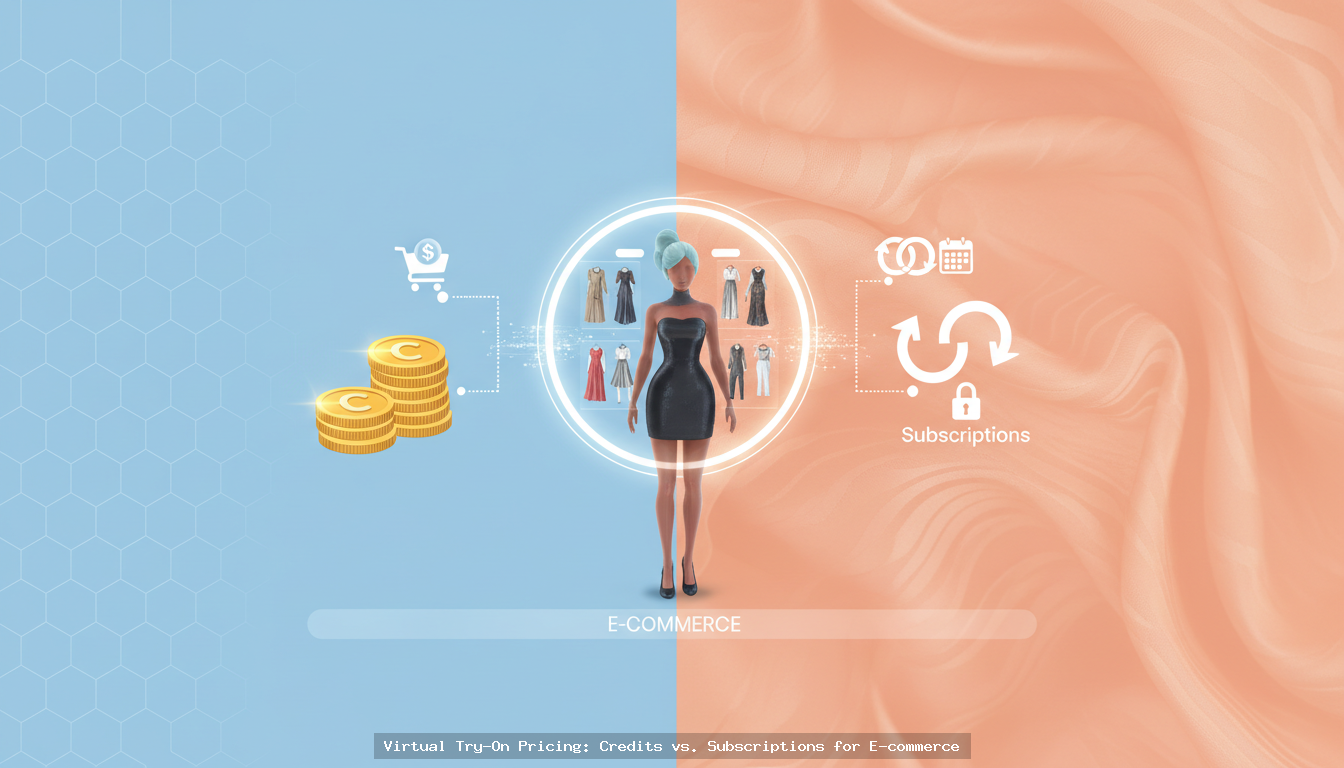
Virtual Try-On Pricing: Credits vs. Subscriptions for E-commerce
Choosing between a credit-based or subscription-based pricing model for virtual try-on (VTO) depends heavily on your e-commerce store's specific needs, traffic patterns, and budget predictability requirements. While subscriptions offer predictable monthly costs, credit-based models like VDressUp's provide unparalleled flexibility, allowing you to pay only for actual usage with no monthly fees or expiring credits, making them ideal for businesses with fluctuating demand or those just starting out.
Understanding Virtual Try-On Pricing Models
As virtual try-on technology becomes a standard feature in e-commerce, online store owners are faced with various pricing structures. The two most prevalent models are credit-based and subscription-based. Each has distinct advantages and disadvantages that can influence your operational costs, scalability, and overall return on investment.
The Credit-Based Model
A credit-based model operates on a pay-as-you-go principle. You purchase a block of credits, and each time a shopper uses the virtual try-on widget, a certain number of credits are deducted from your balance. VDressUp, for instance, offers credits starting from $25, with one credit equating to one try-on. A significant benefit of VDressUp's approach is that credits never expire, and there are no monthly fees.
- Pros:
- Flexibility: Ideal for businesses with seasonal sales or unpredictable traffic, as you only pay for what's used.
- Cost Control: Prevents paying for unused capacity during slow periods.
- No Expiry: Credits often don't expire, ensuring your investment is always available.
- No Monthly Fees: Eliminates recurring overheads, making it budget-friendly for small and growing businesses.
- Cons:
- Less Predictability (if not managed): Without monitoring usage, costs can fluctuate, though this is mitigated by transparent per-try-on pricing.
- Initial Purchase: Requires an upfront purchase of credits, but usually in small, manageable bundles.
The Subscription-Based Model
The subscription model involves paying a recurring fee (monthly or annually) for access to the virtual try-on service, often with different tiers based on usage limits, features, or number of products. These tiers might include a certain number of try-ons per month or access to advanced analytics.
- Pros:
- Predictable Costs: A fixed monthly payment makes budgeting straightforward.
- Bundled Features: Higher tiers often include additional features, support, or higher usage limits.
- Unlimited Usage (in some tiers): Some premium subscriptions offer unlimited try-ons, which can be beneficial for very high-traffic stores.
- Cons:
- Paying for Unused Capacity: You pay the same fee regardless of actual usage, potentially leading to wasted expenditure during low-traffic periods.
- Hidden Fees: Overage charges can apply if you exceed your tier's limits.
- Less Flexibility: Tying into a long-term contract can limit agility, especially for startups or seasonal businesses.
- Monthly Overhead: Adds a fixed recurring expense to your operational costs.
Key Factors When Choosing Your VTO Pricing Model
To make an informed decision, consider these critical aspects of your e-commerce operation:
E-commerce Store Size and Traffic Volume
For smaller stores or those just integrating VTO, a credit-based system like VDressUp's can be more economical. You start with a small credit package and scale up as your traffic and try-on usage grow. Larger stores with consistently high traffic might find a high-tier subscription appealing for its predictability, but they should carefully evaluate if they genuinely utilize the full capacity to avoid overpaying.
Product Catalog Diversity (Clothing, Furniture, Jewelry)
VDressUp supports virtual try-on for various categories, including clothing, furniture, and jewelry. If your store offers a mix of products or specializes in categories where try-on usage might vary (e.g., occasional high-value furniture purchases vs. frequent clothing try-ons), a credit system offers the adaptability to allocate resources where they're most needed without being locked into a uniform usage tier.
Budget Predictability vs. Flexibility
Do you prioritize knowing your exact monthly spend, or do you value the ability to adjust your VTO investment based on real-time performance and demand? Subscriptions offer predictability, while credit-based models offer ultimate flexibility. For many modern e-commerce businesses, especially those in dynamic markets, flexibility can be a powerful competitive advantage.
Scalability for Growth
Consider how easily the pricing model accommodates growth. With a credit system, scaling up is as simple as purchasing more credits as your usage increases. Subscription models require you to upgrade tiers, which can sometimes involve significant price jumps or feature changes you might not immediately need.
Hidden Costs and Feature Locks
Always scrutinize the fine print. Some subscription models might charge extra for advanced analytics, premium support, or integration with specific platforms. With VDressUp, the core functionality of the AI virtual try-on widget, including auto-detection of product pages and shopper photo upload, is consistent, with pricing directly tied to usage through credits. Review all features at https://vdressup.com/features.
Why a Credit System Might Be Your Best Fit (VDressUp's Advantage)
VDressUp's credit-based model is designed with the modern e-commerce merchant in mind, offering a compelling alternative to traditional subscriptions:
- No Monthly Fees, Ever: This eliminates a significant recurring overhead, making it easier to manage cash flow and allocate resources to other growth areas.
- Credits Never Expire: Your investment is always safe. There's no pressure to use credits by a certain date, perfect for businesses with fluctuating demand or those experimenting with VTO.
- Pay-Per-Try-On: You only pay for actual customer engagement. If a product isn't generating try-ons, you're not paying for its VTO capability.
- Ideal for All Sizes: From small boutiques to growing enterprises, the model scales effortlessly without forcing you into expensive, restrictive tiers.
- Transparent Pricing: Simple, straightforward pricing where 1 credit equals 1 try-on, starting from just $25. Explore more at https://vdressup.com/pricing.
Maximizing ROI with Your Chosen VTO Solution
Regardless of the pricing model, the ultimate goal of implementing virtual try-on is to boost your bottom line. A well-integrated VTO solution should drive:
Conversion Rate Optimization
By allowing shoppers to visualize products on themselves, VTO significantly boosts buyer confidence. This increased confidence often translates directly into higher conversion rates, turning more browsers into buyers.
Return Rate Reduction
One of the biggest pain points for online retailers is product returns, especially for clothing and furniture where fit and appearance are crucial. VTO helps shoppers make more informed decisions, reducing the likelihood of returns due to dissatisfaction with how an item looks or fits.
Enhanced Customer Experience
Offering an innovative and personalized shopping experience sets your store apart. VTO provides a unique, engaging way for customers to interact with your products, fostering loyalty and positive brand perception.
Implementing Virtual Try-On: Beyond Pricing
While pricing is a critical consideration, remember to evaluate the overall solution:
Integration Ease (Shopify, Custom E-commerce)
Look for solutions that offer seamless integration with your existing e-commerce platform. VDressUp, for example, provides a JavaScript widget that auto-detects product pages and integrates smoothly with both Shopify and custom e-commerce sites, minimizing setup time and technical hurdles.
Data Privacy and Security
When shoppers upload photos, data privacy is paramount. Ensure your chosen VTO provider has robust security measures and clear privacy policies to protect customer data and build trust.
AI Accuracy and Product Detection
The effectiveness of virtual try-on hinges on its ability to accurately superimpose products onto a shopper's photo. Advanced AI ensures realistic rendering and precise product detection, crucial for a convincing try-on experience across clothing, furniture, and jewelry categories.
Conclusion
The choice between credit-based and subscription-based virtual try-on pricing models boils down to your business's unique operational style and financial strategy. While subscriptions offer static predictability, a credit-based system like VDressUp's provides unparalleled flexibility, cost efficiency, and scalability, with no monthly fees and non-expiring credits. By carefully evaluating your needs against these factors, you can select the VTO solution that best supports your e-commerce growth and customer satisfaction goals.
Frequently Asked Questions About Virtual Try-On Pricing
What is a credit-based virtual try-on pricing model?
A credit-based model means you purchase units (credits) upfront, and one credit is deducted for each virtual try-on a customer performs. This offers a pay-as-you-go system, ideal for managing costs based on actual usage, often with no monthly fees or expiration dates.
How do subscription-based VTO models typically work?
Subscription models require a recurring monthly or annual payment for access to the VTO service. They often come in tiers, offering a set number of try-ons or features, providing predictable costs but potentially leading to paying for unused capacity during slow periods.
Which pricing model is better for small e-commerce stores?
For small e-commerce stores, a credit-based model is often superior. It eliminates fixed monthly costs, allows for flexible spending as traffic fluctuates, and ensures you only pay for the try-ons your customers actually use, making it highly budget-friendly.
Do virtual try-on credits expire?
With VDressUp, virtual try-on credits never expire. This policy provides maximum value and flexibility, ensuring your investment remains available for use whenever your customers are ready to try on products, without any time pressure.
Can virtual try-on reduce product returns?
Yes, virtual try-on is highly effective at reducing product returns. By allowing shoppers to realistically visualize how clothing, furniture, or jewelry looks on them before purchase, it significantly increases buying confidence and minimizes dissatisfaction, leading to fewer returns.
Is virtual try-on suitable for furniture and jewelry?
Absolutely. Modern AI virtual try-on technology, like VDressUp's, is capable of accurately superimposing furniture into a customer's room photo or jewelry onto their body, offering a realistic preview that enhances the shopping experience for these specific product categories.
Frequently asked questions
What is a credit-based virtual try-on pricing model?
A credit-based model means you purchase units (credits) upfront, and one credit is deducted for each virtual try-on a customer performs. This offers a pay-as-you-go system, ideal for managing costs based on actual usage, often with no monthly fees or expiration dates.
How do subscription-based VTO models typically work?
Subscription models require a recurring monthly or annual payment for access to the VTO service. They often come in tiers, offering a set number of try-ons or features, providing predictable costs but potentially leading to paying for unused capacity during slow periods.
Which pricing model is better for small e-commerce stores?
For small e-commerce stores, a credit-based model is often superior. It eliminates fixed monthly costs, allows for flexible spending as traffic fluctuates, and ensures you only pay for the try-ons your customers actually use, making it highly budget-friendly.
Do virtual try-on credits expire?
With VDressUp, virtual try-on credits never expire. This policy provides maximum value and flexibility, ensuring your investment remains available for use whenever your customers are ready to try on products, without any time pressure.
Can virtual try-on reduce product returns?
Yes, virtual try-on is highly effective at reducing product returns. By allowing shoppers to realistically visualize how clothing, furniture, or jewelry looks on them before purchase, it significantly increases buying confidence and minimizes dissatisfaction, leading to fewer returns.
Is virtual try-on suitable for furniture and jewelry?
Absolutely. Modern AI virtual try-on technology, like VDressUp's, is capable of accurately superimposing furniture into a customer's room photo or jewelry onto their body, offering a realistic preview that enhances the shopping experience for these specific product categories.